
Musculoskeletal & Regenerative Care
Restoring Movement, Reducing Pain: CYTOTRON® for Musculoskeletal Care
Savitur Healthcare believe musculoskeletal health is more than just managing pain — it’s about restoring mobility, strength, and confidence. Our approach combines advanced, non-invasive CYTOTRON® therapy with supportive care designed to help your body repair itself naturally, without the risks of surgery or long recovery times.
Over the years, Savitur has become a trusted destination for individuals seeking joint regeneration, cartilage repair, and pain reduction through innovative technology and a compassionate approach. We aim to offer minimally disruptive treatments that let you return to your daily life with comfort and improved function.
With a focus on early intervention, tailored therapy programs, and long-term joint health, our mission is to help individuals regain their independence and improve their quality of life.
From Pain to Mobility: The CYTOTRON® Process
CYTOTRON® therapy does not simply mask pain — it works at the cellular level to help your body restore its natural balance. By using targeted Rotational Field Quantum Magnetic Resonance – Fast Radio Bursts (RFQMR-FRB), this therapy awakens dormant cells in joints, cartilage, and soft tissues, prompting them to begin natural repair. It promotes the rebuilding of cartilage by stimulating key structural proteins such as collagen and elastin, which act as cushions and stabilizers for your joints. The process also helps calm persistent inflammation, reducing stiffness and swelling that restrict movement. Over time, this gentle yet precise approach enhances flexibility, supports long-term joint health, and can significantly delay or reduce the need for invasive surgeries or prolonged medication use.
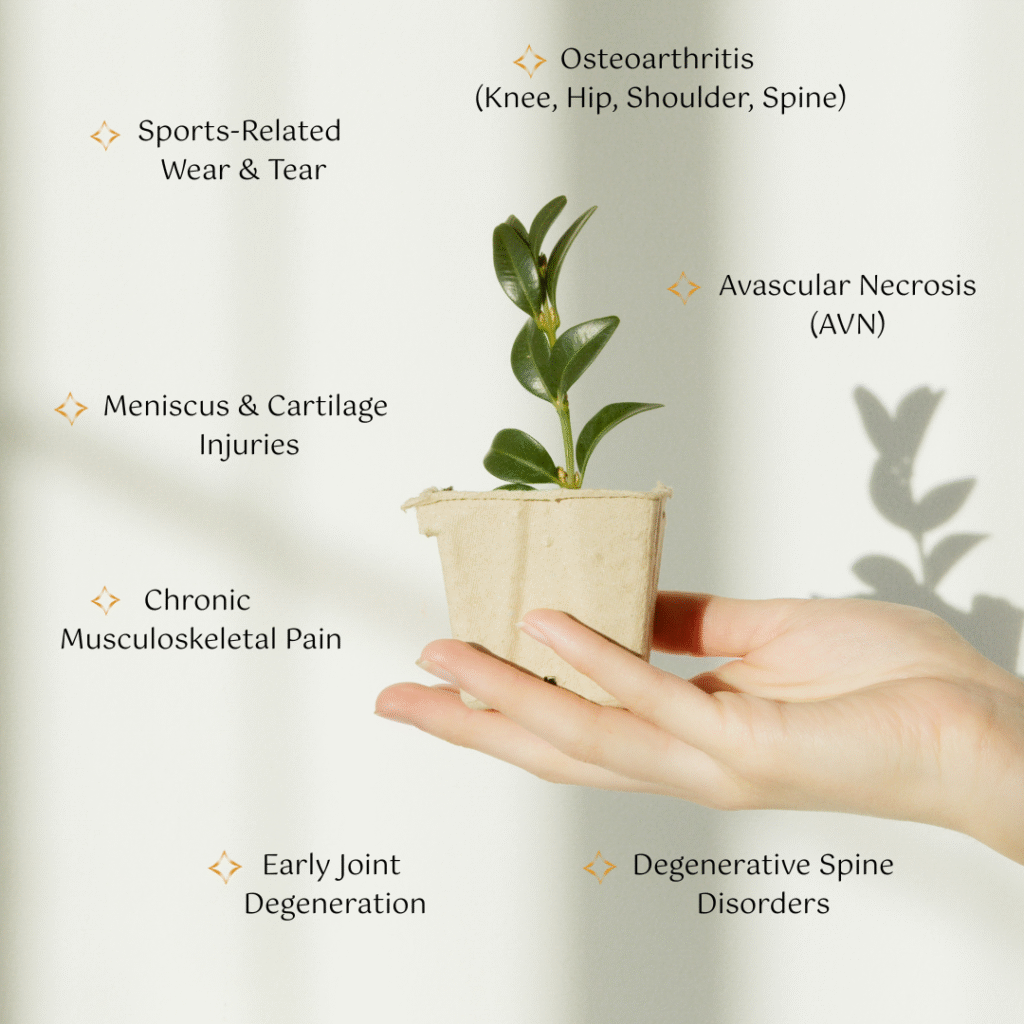
Osteoarthritis (Knee, Hip, Shoulder, Spine)
Osteoarthritis is the most common form of arthritis and occurs when the protective cartilage that cushions the ends of bones gradually breaks down. This leads to pain, stiffness, swelling, and reduced flexibility. It frequently affects weight-bearing joints such as the knees and hips, as well as the shoulders and spine. Patients may notice difficulty climbing stairs, walking long distances, or performing daily tasks. Early management can help slow progression, reduce discomfort, and preserve joint function.
Sports-Related Wear & Tear
Athletes and physically active individuals often experience wear and tear due to repetitive strain, high-impact movements, or overtraining. Over time, this can result in micro-injuries to muscles, tendons, ligaments, and cartilage. Symptoms include persistent pain, swelling, and limited mobility, which may worsen if left untreated. Addressing sports-related degeneration early helps athletes and active individuals maintain performance, prevent further injury, and extend their active years.
Meniscus & Cartilage Injuries
The meniscus is a C-shaped cushion of cartilage in the knee that absorbs shock and stabilizes the joint. Cartilage elsewhere in the body also plays a critical role in smooth, pain-free movement. Tears or damage, whether from sudden trauma (like twisting injuries) or long-term degeneration, can cause sharp pain, swelling, joint locking, and reduced range of motion. Without timely care, these injuries can progress to chronic joint instability and early arthritis.
Avascular Necrosis (AVN)
Avascular Necrosis, also known as osteonecrosis, develops when blood flow to a bone is reduced or interrupted. Without sufficient circulation, bone tissue begins to die, which can eventually lead to joint collapse. AVN most commonly affects the hip but can occur in other joints as well. Symptoms include deep joint pain, stiffness, and difficulty bearing weight. Early intervention is crucial to preserve joint health and delay or prevent the need for surgical replacement.
Chronic Musculoskeletal Pain
Chronic musculoskeletal pain refers to persistent discomfort in muscles, bones, ligaments, and tendons that lasts longer than 3–6 months. It may stem from injury, poor posture, repetitive strain, or degenerative conditions. Patients often experience dull aches, stiffness, and fatigue, which can significantly affect daily activities and overall quality of life. Comprehensive treatment aims not only to reduce pain but also to restore function and improve long-term mobility.
Early Joint Degeneration
In the early stages of joint degeneration, patients may experience mild stiffness, minor swelling, or occasional pain during physical activity. These subtle signs are often overlooked but can indicate the beginning of cartilage thinning and loss of joint cushioning. If addressed promptly, progression can be slowed significantly, helping to maintain joint strength, mobility, and long-term health.
Degenerative Spine Disorders
Degenerative spine disorders encompass a range of age-related and injury-related conditions such as degenerative disc disease, spondylosis, and spinal stenosis. These conditions involve gradual breakdown of spinal discs, joints, and vertebrae, which can lead to back pain, stiffness, nerve compression, numbness, or weakness in the limbs. Left untreated, they may progress to significant mobility restrictions. Targeted treatment can alleviate pain, improve posture, and restore spinal stability.